The Japanese Food Landscape
Japan has more Michelin-starred restaurants than any other country, including France. But the magic of Japanese food is not confined to fine dining. It is the ¥800 bowl of ramen at a standing counter, the ¥150 onigiri from 7-Eleven at midnight, the free green tea at every restaurant. Quality is simply the baseline, regardless of price point.
The sweet spot for most travelers is the mid-range bracket. You will eat spectacularly well, trying different restaurants for every meal, for roughly $40/day. That is cheaper than most European capital cities. For a full budget breakdown including food, see our Japan Trip Cost guide, or use our Budget Calculator.
How to Order Food in Japan
Ordering food in Japan can feel intimidating if you do not know the system. But there are really only three ordering methods you will encounter, and once you know them, eating out becomes completely stress-free. For the complete guide with photos and tips, see our How to Order Food in Japan article.
Most common at ramen shops, gyudon, and curry shops. Insert money into the vending machine by the entrance, press the button for your dish (often with photos), receive a ticket, and hand it to the chef. No Japanese needed.
Increasingly common at izakayas, conveyor belt sushi, and family restaurants. A tablet at your table shows the menu, often with an English language option. Browse, tap your order, and it arrives at your table. Pay at the register when done.
At sit-down restaurants, you will get a menu (often with photos) and a waiter will take your order. To call a waiter, say "sumimasen" (excuse me) or press the call button at your table. Many restaurants have plastic food displays outside, so point at what you want.
Say "itadakimasu" (いただきます) before eating, which means "I humbly receive this food." When finished, say "gochisousama deshita" (ごちそうさまでした), meaning "thank you for the meal." These are not mandatory for tourists, but locals genuinely appreciate the effort. For more, see our Culture & Etiquette Guide.
Must-Try Japanese Dishes
Japan's culinary range is staggering. Here are the essential dishes every first-time visitor should try, all available at affordable, casual restaurants. Each region also has unique specialties, so see our Regional Specialties guide for what to eat where.
Ramen: A Deep Dive
Ramen is arguably Japan's most beloved dish, with fierce regional rivalries and shops that attract hour-long queues. Understanding the four main broth types helps you find your perfect bowl. For the complete guide including best shops and ordering tips, read our Ramen Guide.
Slurp loudly. Seriously, it is not only accepted, it is considered the proper way to eat ramen. Slurping aerates the noodles and shows appreciation. Eat fast. Ramen noodles absorb broth quickly and get soggy. Most locals finish a bowl in 10–15 minutes. This is not a leisurely meal but an intense, focused eating experience. For more on Japanese dining customs, see our etiquette guide.
Sushi Etiquette
There is a massive range of sushi experiences in Japan, from ¥120/plate conveyor belt chains to ¥30,000+ omakase counters. The etiquette adjusts accordingly. At conveyor belt places, it is completely casual. At a proper sushi counter, a few rules apply. Our complete Sushi Etiquette guide covers everything.
For more on chopstick rules (including the two taboos you should never break), see our dedicated guide.
Chains like Sushiro, Kura Sushi, and Hamazushi serve excellent quality sushi from ¥120/plate ($0.80). A filling meal costs $8–15. The quality would be considered mid-range at sushi restaurants outside Japan. These are our top recommendation for budget travelers.
Street Food Hotspots
Japan does not have the same walking-around street food culture as Southeast Asia, but certain areas are legendary for on-the-go eats. The best spots are market streets, temple approaches, and festival grounds. For the full guide with city-by-city recommendations, see our Japanese Street Food guide.
In Japan, eating while walking is considered rude (tabearuki / 食べ歩き). When you buy street food, eat it at the stall or find a bench. The exception is festival food: at matsuri events, walking and eating is perfectly fine and expected.
Convenience Store Food: The Hidden Gem
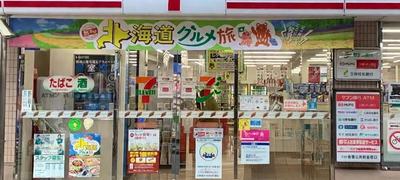
This is the tip that surprises everyone: Japanese convenience stores serve food that is genuinely delicious, freshly made, affordable, and available 24/7. The big three chains (7-Eleven, Lawson, FamilyMart) are on every other block and each has their own specialties. For the full guide, read Convenience Store Food: The Hidden Gem.
7-Eleven has the best onigiri and prepared foods. Lawson's "Uchi Café" dessert line is legendary, so try the basque cheesecake. FamilyMart's "Famichiki" fried chicken is a cult favorite. Hot food items (nikuman steamed buns, fried chicken) are by the register. Staff will heat your bento in the microwave, so just nod when they ask "atatamemasu ka?" (温めますか, warm it up?). You can also pay with your IC card.
Eating Well on a Budget
Japan is one of the few countries where budget eating does not mean bad eating. Chain restaurants serve genuinely excellent food at remarkably low prices. Here are your best options.
It is entirely possible to eat three satisfying meals for ¥3,000 ($21) per day in Japan. Breakfast: konbini onigiri + coffee (¥350). Lunch: gyudon chain (¥500). Dinner: ramen (¥900). Snacks + drink: ¥250. Total: ¥2,000, with budget to spare. You will not go hungry and you certainly will not eat badly.
Dietary Restrictions & Allergies
Eating vegetarian, vegan, or with food allergies in Japan requires more planning than in Western countries. Dashi (fish stock) is in almost everything, including miso soup, most noodle broths, and many sauces. It is not impossible, but you need to know where to look.
Vegetarian & Vegan
Shojin ryori (Buddhist temple cuisine) is fully vegan and available at many temples. Indian and Thai restaurants are reliably vegetarian-friendly. The app HappyCow is essential for finding options. In konbini, inari sushi (fried tofu pouches) and natto rolls are usually safe options, but always check labels. For the full guide, read Vegetarian & Vegan in Japan.
Food Allergies
Japan requires labeling of 8 major allergens on packaged food (wheat, buckwheat, eggs, milk, peanuts, shrimp, crab, walnuts). Restaurants do not always list allergens, so carrying an allergy card in Japanese is highly recommended. Read our Food Allergies guide for printable allergy cards and emergency phrases.
Dashi (fish stock) is in most soups, sauces, and cooked dishes, even vegetable ones. Mirin (sweet rice wine) is used extensively in cooking. Katsuobushi (bonito flakes) is sprinkled on many dishes as a finishing touch. If you are strict vegetarian/vegan, learning to say "niku nashi, sakana nashi" (肉なし、魚なし, meaning no meat, no fish) is essential. See our restaurant phrases for more.
Essential Food Phrases
You can absolutely eat in Japan without speaking Japanese. But these phrases will make ordering smoother, earn you smiles from staff, and help with dietary needs. For the complete list, visit our Restaurant & Food Phrases page. Also see essential greetings for everyday interactions.
Frequently Asked Questions
Common food questions from visitors
Printable packing checklist + 50 essential phrases PDF — plus weekly tips in your inbox.